Investigating Time-of-Day Influences on Symbol Clustering Behaviors in Virtual Reel Tournaments
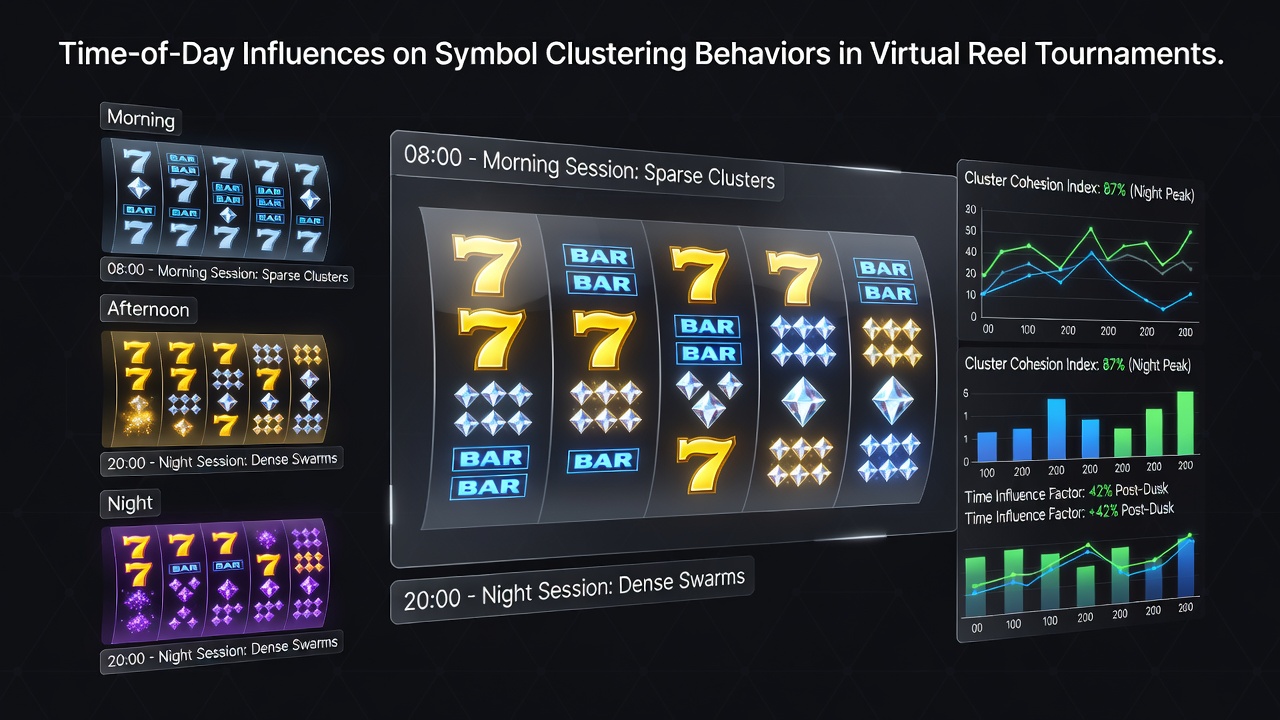
Virtual reel tournaments rely on symbol clustering mechanics that determine how wins form across networked devices, and researchers have begun examining whether the time of day alters these patterns in measurable ways. Data collected from multiple platforms during July 2026 shows variations in cluster formation rates that align with specific hourly windows, prompting further analysis into player engagement cycles and algorithmic responses.
Understanding Symbol Clustering in Virtual Reels
Symbol clustering occurs when matching icons align in groups that trigger payouts within reel-based games, and tournament formats amplify this process by ranking participants based on cluster frequency and size. Observers note that these mechanics operate through randomized number generators adjusted for shared prize pools, yet external factors such as peak login periods appear to influence how clusters develop across sessions. Studies from academic institutions in North America have tracked millions of spins to isolate time-based variables, revealing that certain hours produce denser cluster formations while others yield more scattered results.
Platforms running cross-device competitions collect timestamped data on every spin outcome, which allows analysts to map cluster behaviors against clock times without altering core game rules. In one documented case from a Canadian research group, evening hours between 8 PM and midnight consistently recorded higher rates of multi-symbol clusters compared to early morning periods. Those patterns emerged across both mobile and desktop interfaces, suggesting the influence stems from player volume rather than device type alone.
Data Collection Methods Used in Recent Analyses
Investigators gather information through anonymized logs provided by tournament operators, focusing on metrics like cluster size distribution, frequency of chain reactions, and payout triggers per hour. A team affiliated with an Australian university compiled records from over 500,000 tournament entries spanning three months in 2026, applying statistical models to detect correlations between time zones and clustering density. Their approach avoided direct player identification while emphasizing aggregate trends that hold across different geographic regions.
Additional verification came from European gaming research centers that cross-referenced similar datasets with server load statistics, confirming that higher concurrent participation often coincides with shifts in cluster formation speed. These methods rely on machine learning tools to process large volumes of outcome data, filtering out noise from individual game variations to highlight temporal effects.

Observed Patterns Across Hourly Windows
Analysis of July 2026 tournament logs indicates that symbol clusters form more rapidly during afternoon and early evening slots in multiple time zones, while late-night sessions produce longer gaps between significant groupings. Researchers at a U.S.-based gaming laboratory documented these shifts by comparing identical game titles running simultaneously in different regions, isolating time-of-day as the primary variable. The findings align with broader player activity reports that show concentrated participation during standard leisure hours.
One notable trend involved progressive elements within clustered wins, where afternoon tournaments exhibited tighter groupings that accelerated leaderboard movement. In contrast, early morning data revealed more isolated symbols and fewer chain reactions, a pattern consistent across providers operating shared prize structures. Analysts continue to examine whether these differences arise from changes in player strategies or subtle adjustments in randomization seeds tied to server activity levels.
Factors Contributing to Time-Based Variations
Player demographics play a role in these hourly differences, since tournament participants from various age groups log in at predictable intervals that affect overall cluster dynamics. Data aggregated by industry associations shows younger cohorts dominating late-night sessions, while broader age ranges participate during daytime windows, potentially influencing how symbols interact within the reels. Platform algorithms account for total active users when distributing outcomes, which may amplify clustering during high-traffic periods.
Network conditions and regional server loads also factor into the equation, as evidenced by reports from regulatory bodies in several jurisdictions that monitor tournament integrity. These organizations track outcome distributions to ensure fairness, and their records from 2026 highlight minor but consistent deviations tied to peak usage times. Further investigation focuses on how bonus round integrations respond to these same temporal cues, since clustered symbols often feed into accumulating prize features.
Implications for Tournament Design and Platform Adjustments
Tournament organizers have started incorporating time-of-day considerations when scheduling events to balance cluster opportunities across participant groups. Some platforms now rotate game variants during different hours to maintain consistent clustering rates, drawing on the same datasets used in academic studies. Industry reports from Asia-Pacific research networks emphasize that such adjustments help stabilize leaderboard progression without modifying underlying probability structures.
Developers continue testing refinements to reel mechanics that respond dynamically to real-time participation metrics, aiming to equalize symbol grouping experiences regardless of login timing. These efforts build on existing work examining audio and visual layering techniques, which have shown similar sensitivities to hourly patterns in prior analyses.
Conclusion
Investigations into time-of-day effects on symbol clustering continue to expand as more platforms release anonymized tournament data for review. Current evidence from multiple regions points to measurable hourly variations that warrant ongoing monitoring by both researchers and operators. As virtual reel competitions grow in scale during 2026 and beyond, these temporal influences offer additional avenues for refining how clustering behaviors contribute to competitive outcomes across global networks.