How Emerging Technologies Reshape Chain Reaction Mechanics Within Competitive Gaming Environments
Competitive gaming environments rely on chain reaction mechanics where one player action triggers sequences of responses, multipliers, or environmental shifts that alter match outcomes in real time, and emerging technologies continue to modify how these sequences develop and resolve across major esports titles. Data from industry reports indicates that advancements in processing power and connectivity have allowed developers to implement more intricate reaction chains that respond dynamically to player inputs while maintaining competitive balance.
Artificial Intelligence Integration in Reaction Modeling
Artificial intelligence systems now analyze thousands of potential chain reaction paths during live matches, enabling predictive adjustments that reshape how combos unfold in titles featuring multi-stage ability interactions. Researchers at institutions across North America have documented cases where machine learning models adjust reaction probabilities based on historical tournament data, resulting in sequences that evolve differently from one match to the next. In June 2026 several professional leagues introduced AI-assisted balance patches that recalibrated chain reaction thresholds in real time, according to updates released by the Entertainment Software Association.
Teams that study these models gain advantages when they anticipate how an opponent's opening move might cascade into extended reaction chains, and developers have responded by embedding AI tools that simulate millions of variations during pre-match preparation. Observers note that this approach reduces predictability while preserving fairness, since the underlying algorithms draw from aggregated anonymized player statistics rather than individual exploits.
Network Advancements and Latency Reduction
High-speed networks including 5G infrastructure and distributed cloud servers have shortened the time between input and visible chain reaction feedback, allowing mechanics that once required deliberate pacing to operate at higher speeds without desynchronization. Figures from Canadian regulatory bodies tracking digital infrastructure show latency reductions of up to 40 percent in major esports venues since 2024, which directly affects how quickly environmental reactions propagate across networked sessions.
Players now execute follow-up actions while prior reactions still resolve on screen, creating overlapping chains that demand precise timing and spatial awareness. Game engines leverage edge computing nodes to process these overlapping sequences locally before syncing with central servers, and this architecture prevents the bottlenecks that previously interrupted complex reaction flows during high-stakes events.
Immersive Interfaces Altering Player Perception
Virtual and augmented reality interfaces change how competitors perceive and respond to chain reaction cues by overlaying additional data layers onto the base game environment. Studies conducted by European research consortia reveal that participants using VR headsets identify branching reaction paths faster than those limited to traditional displays, because spatial audio and depth cues highlight potential cascade points earlier in the sequence. Professional organizations have begun testing hybrid setups where players toggle between standard monitors and immersive modes depending on the stage of competition.
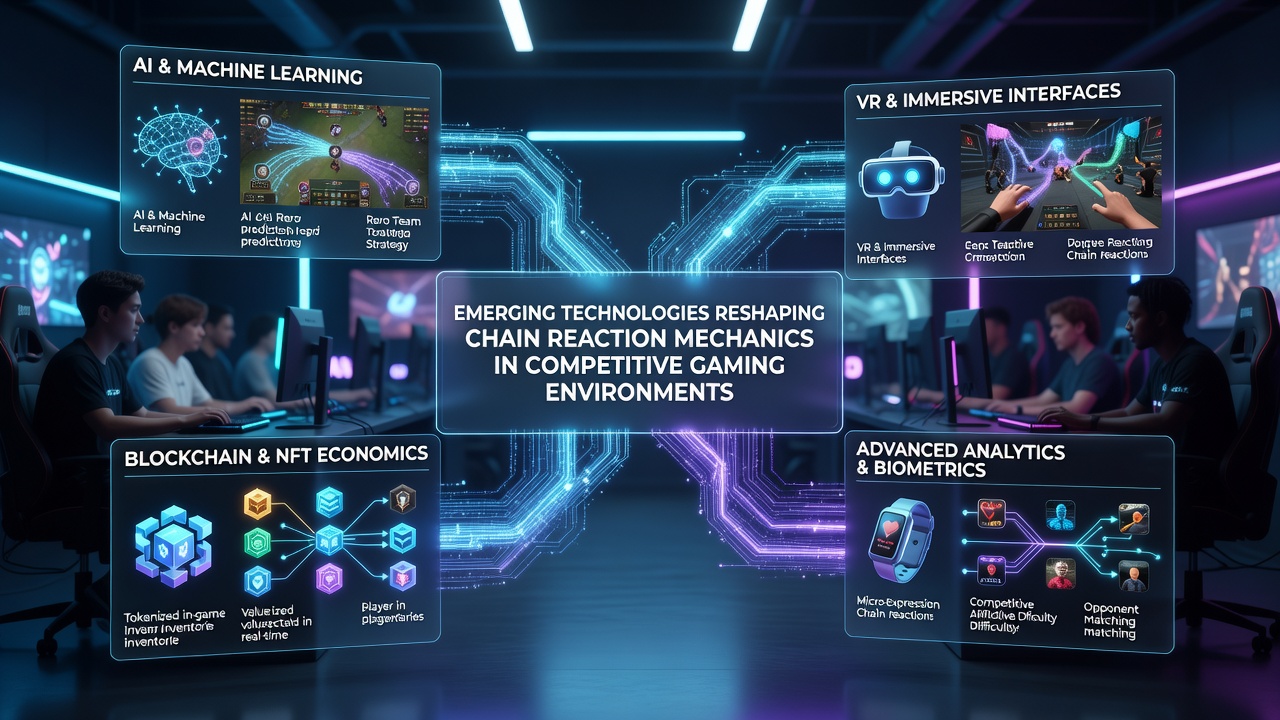
These interfaces also introduce new variables, such as haptic feedback that vibrates in patterns corresponding to ongoing reaction chains, giving competitors physical confirmation of events occurring outside their direct field of view. Data collected during regional qualifiers demonstrates measurable improvements in reaction chain completion rates when haptic layers supplement visual indicators, although governing bodies continue to evaluate standardization requirements to ensure equitable access across regions.
Cloud-Based Simulation and Real-Time Adaptation
Cloud platforms now host simulation environments that test chain reaction variants against live opponent tendencies before matches begin, and teams incorporate these simulations into preparation routines. Reports issued by the Australian Interactive Games Association detail how cloud resources enable simultaneous testing of hundreds of reaction permutations, allowing coaches to identify optimal sequences without consuming local hardware cycles during tournaments.
Adaptation occurs continuously because servers collect telemetry from every match and feed it back into the simulation models within minutes, which means chain reaction parameters can shift between rounds based on observed patterns rather than remaining static across an entire event. This capability has proven particularly relevant in June 2026 competitions where multiple titles adopted rolling updates that refined reaction multipliers overnight between match days.
Conclusion
Emerging technologies continue to expand the complexity and responsiveness of chain reaction mechanics across competitive gaming platforms, supported by measurable improvements in processing, connectivity, and interface design. Industry data collected through 2026 confirms these shifts occur alongside regulatory oversight from multiple regions, ensuring that innovations enhance rather than disrupt established competitive frameworks. As new tools integrate further, the structure of reaction sequences will likely incorporate additional layers of adaptability while retaining core principles of skill-based execution.