Device Tilt Mechanics Syncing with Networked Prize Escalations During Provider-Linked Mobile Reel Events

Device tilt mechanics have become integrated components in provider-linked mobile reel events where physical movement of a smartphone or tablet directly influences the rate at which networked prize pools escalate, and developers have engineered these systems to register accelerometer data alongside server-side jackpot tracking in real time. The synchronization occurs through APIs that transmit tilt angles and velocity readings to centralized servers, which then adjust prize multipliers across multiple player sessions connected to the same provider network. Observers note that this process allows individual device movements to contribute to collective prize growth without requiring separate manual inputs from each participant.
Technical Integration of Tilt Sensors and Prize Networks
Accelerometers embedded in modern mobile devices capture tilt data at frequencies exceeding 100 readings per second, and providers route this information through secure connections to backend systems that manage progressive prize pools. When a player tilts the device within specified parameters during a reel spin, the system registers the action as an event that can increment the escalation rate of the shared jackpot by a fractional amount calculated according to predefined algorithms. Research from gaming technology firms indicates that these increments compound across thousands of simultaneous sessions, particularly during scheduled mobile reel events where multiple providers link their networks for limited-time competitions.
July 2026 saw several providers expand these linkages, resulting in documented increases in cross-platform prize activity tracked by state regulatory bodies. The New Jersey Division of Gaming Enforcement released figures showing that tilt-synced events contributed measurable portions of monthly progressive totals, while hardware compatibility checks ensured that only devices meeting minimum sensor accuracy standards participated in the escalations.
Provider Event Structures and Real-Time Synchronization
Provider-linked mobile reel events typically run on scheduled windows lasting between 48 and 96 hours, during which tilt inputs from participating devices feed into a unified prize calculation engine. Each tilt event carries a weighted value that depends on angle severity, duration, and timing relative to reel outcomes, and the engine distributes these values across the network so that every connected player experiences visible prize growth on their interface. Data patterns collected during these windows demonstrate that coordinated tilt activity from regional player clusters can accelerate escalation curves beyond baseline projections set at event launch.
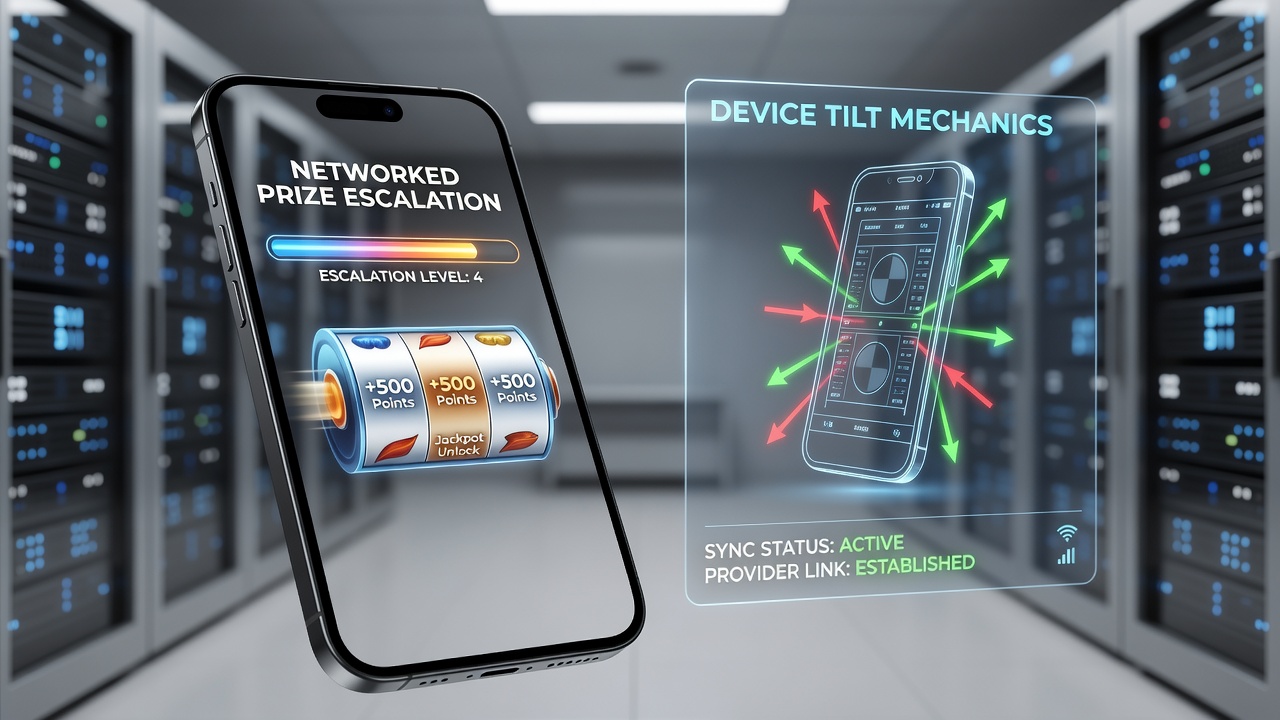
One documented case involved a July 2026 provider collaboration that connected over 120,000 mobile sessions across multiple operators, and analysts recorded that tilt-triggered increments accounted for approximately 14 percent of the final prize pool expansion. The system employed latency compensation protocols to maintain synchronization even when network conditions varied, ensuring that late-arriving tilt data still contributed to the escalation total before the event concluded.
Regulatory Oversight and Data Reporting Requirements
Regulatory frameworks in several jurisdictions now require providers to log tilt-related prize contributions separately from standard wager data, and reports submitted to oversight agencies include timestamped accelerometer readings correlated with jackpot increments. The Australian Gambling Research Centre has published summaries of these logs from licensed operators, revealing consistent patterns where tilt intensity correlates with higher escalation velocity during peak event hours. These records also capture instances where device orientation changes outside acceptable ranges are filtered out to prevent artificial manipulation attempts.
Cross-border events add another layer of complexity because different regions maintain distinct rules for data transmission and prize verification, yet providers have implemented standardized APIs that satisfy multiple regulatory standards simultaneously. Figures released in mid-2026 showed that events spanning North American and European networks processed tilt data from more than 40 distinct device models without compromising synchronization accuracy.
Conclusion
Device tilt mechanics continue to evolve alongside networked prize systems in provider-linked mobile reel events, creating direct pathways between physical player actions and collective jackpot growth. Technical standards established by 2026 ensure reliable data flow from individual devices to shared servers, while regulatory reporting maintains transparency around how these contributions accumulate. As more providers adopt these synchronized frameworks, the volume of tilt-influenced prize activity is expected to expand in subsequent event cycles.