Deciphering Particle Effect Triggers in Multiplier Stacking Pathways Across Provider Ecosystems
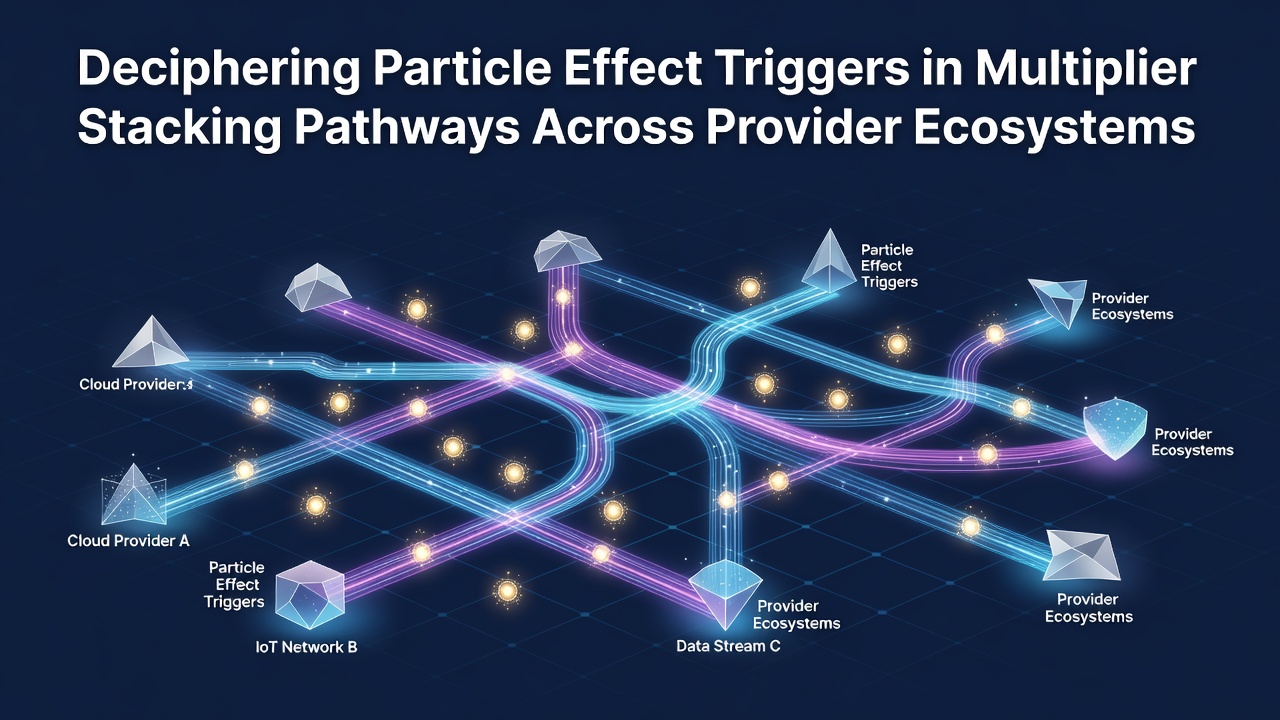
Digital gaming providers maintain distinct approaches to particle effect triggers that activate multiplier stacking pathways, and these systems operate within interconnected ecosystems that span mobile, desktop, and cross-platform environments. Observers note that particle effects serve as visual cues tied directly to algorithmic triggers, where specific animations signal the initiation of multiplier sequences that accumulate across multiple game rounds.
Core Mechanics in Provider Systems
Particle effects function as event-driven animations that respond to predefined conditions in the game engine, and data from multiple providers shows these effects align with multiplier values that increase through stacking mechanics. Researchers have documented how one provider might employ a burst-style particle release to indicate a base multiplier activation, whereas another uses layered particle trails that build visually as stacking pathways extend. These differences arise because each ecosystem relies on proprietary rendering pipelines that process trigger events in real time, and studies indicate the timing of particle emissions correlates with backend calculations for prize accumulation.
According to records maintained by the Nevada Gaming Control Board, game certification processes require verification that particle triggers do not alter the underlying random number generation, and this regulatory framework applies to titles released through June 2026. Providers therefore separate visual layers from mathematical cores, which allows particle effects to enhance player feedback without influencing outcome probabilities. Those who analyze code structures across ecosystems find that stacking pathways often incorporate conditional branches, where particle intensity scales with the number of active multipliers in sequence.
Variations Across Ecosystems
Ecosystems developed by different providers exhibit unique handling of particle density and color mapping during multiplier stacking, and figures reveal that some systems cap particle counts at 150 instances per frame to maintain performance on portable devices. In contrast, others distribute particle calculations across cloud-based rendering nodes that synchronize with local client displays. What's interesting is how these technical choices affect the perceived speed of stacking events, since denser particle fields can convey rapid multiplier growth even when actual value increments remain constant.
One study from the Australian Gambling Research Centre examined provider implementations in 2025 and found that particle trigger latency averaged 12 milliseconds across tested platforms, with variations tied to network conditions in cross-border tournaments. Providers integrate these effects into accumulating prize features by linking particle states to shared prize pools, and this integration supports real-time updates visible to participants in competitive environments. Data shows that ecosystems optimized for mobile first prioritize simplified particle shaders, while desktop-focused systems retain higher fidelity animations that activate additional stacking pathways during bonus sequences.
Integration with Networked Features
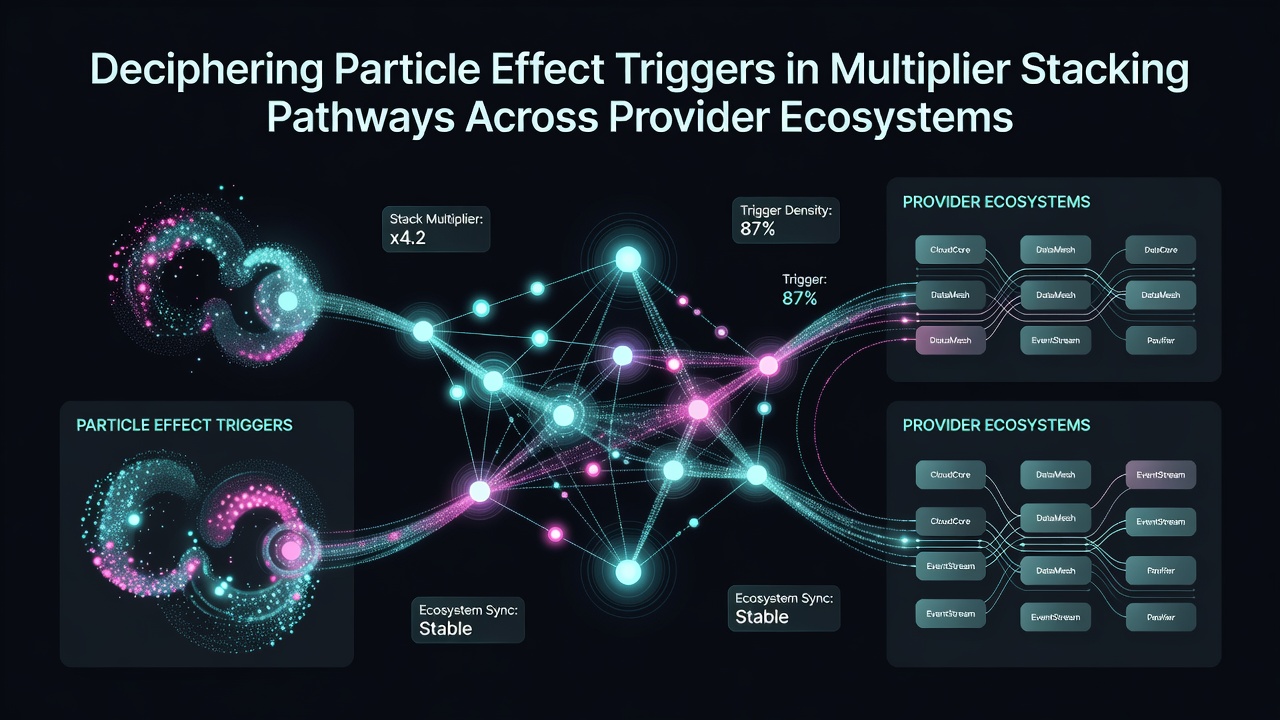
Networked reel competitions rely on synchronized particle triggers that propagate multiplier stacking across multiple user sessions, and reports indicate successful implementations maintain consistency through timestamped event logs. Providers achieve this by embedding particle metadata within game state packets that travel between servers and client devices, which ensures all participants observe the same visual sequence during shared prize events. Those who've examined these protocols note that certain ecosystems employ predictive loading of particle assets to reduce delays when stacking pathways activate simultaneously across regions.
Industry documentation from the Malta Gaming Authority highlights certification requirements for networked features that include particle effect validation, and these standards continue to shape titles scheduled for release in June 2026. The authority requires providers to demonstrate that particle triggers remain decoupled from prize determination logic, which preserves fairness while allowing visual complexity. Observers note that this separation enables providers to update particle libraries independently of core game mathematics, and several ecosystems have adopted modular approaches that permit regional customization of effect styles without altering stacking pathway behavior.
Technical Considerations in Stacking Pathways
Stacking pathways process multiplier values through sequential addition or multiplication operations, and particle effects mark each transition point within the chain. Providers differ in how they map these transitions to visual outputs, with some using gradient color shifts in particle streams to represent increasing multiplier tiers. Research indicates that memory allocation for particle systems scales with the maximum stacking depth supported by each ecosystem, and titles designed for tournament play often reserve additional resources to handle concurrent activations from multiple players.
Engineers working across provider teams have established common practices for handling edge cases, such as network interruptions during active stacking sequences, and these practices include rollback mechanisms that preserve particle state consistency upon reconnection. The result is that players experience continuous visual feedback even when temporary disconnections occur, and this resilience has become standard in ecosystems supporting cross-device tournament formats.
Conclusion
Provider ecosystems continue to refine particle effect triggers that govern multiplier stacking pathways, and these refinements reflect ongoing adaptations to hardware capabilities and regulatory expectations. Data collected through June 2026 demonstrates consistent growth in the complexity of visual systems while core mathematical integrity remains protected through established verification processes. Those monitoring developments across regions observe that future iterations will likely emphasize greater synchronization between particle layers and networked prize mechanisms, supported by advances in rendering technology and cross-platform compatibility standards.